Mistakes of an Amateur Film Photographer and How You Can Avoid Them
Updated: Nov 10, 2021

Film photography is on the rise again, and if you're jumping onto the hype train, there are a few things you should know.
I bought my first film camera in June 2020 and learned the hard way about what not to do.
There's always a learning curve with any new hobby, but to help you avoid making the same mistakes, I'm sharing a few things to consider when starting your film photography journey.
1. The cost of film
Film photography is EXPENSIVE; there's more to it than just buying your camera and film.
Let's break down what these costs might look like*:
Film:
Aside from the cost of the camera (we'll get to that later), film rolls can average around $15 for a single role depending on the brand type or film format. Not only are film rolls expensive, but they are also pricey to develop.
I developed my film at a photo lab that charged $13.99 per 36 exposures, including digital or print conversions. If you're from a suburban town like me, there aren't many places nearby that develop film, so travel time and wait times for prints to process can add up (depending on the spot, this could take 1 week+).
There is also mail-in film developing services in case photo labs are inaccessible to you; however, prices for this service can upsurge and wait times may take longer, sometimes averaging around 3-4 weeks to process and complete an order.
Camera:
Film photography is a novelty these days, and good cameras are hard to come by. We can't exactly purchase film cameras from retail stores like we used to.
Since film cameras aren't widely offered, prices can range.
I suggest starting out small with a disposable camera to get a feel for the style and look while getting used to the learning curve. Since the film is already properly loaded, all you have to do is point and shoot.
To find a film camera that works best for you, Stan Horaczek wrote a great article discussing different types of cameras, plus the advantages and disadvantages of each. Certainly worth a read!
Batteries:
Yes, batteries are still very much a thing and well-needed depending on your camera. I learned the hard way that some cameras don't take standard batteries like triple-A. My camera only takes Lithium 123, which is a high-power battery. How many appliances use Lithium 123 batteries? Literally, this is the first time I've ever heard of it, and I'm using two of them to power up my camera.
For a six-pack, these cost around $25+, so do your research first and consider these costs.
*Expenses will differ depending on the type of camera and access to film services
2. Check out thrift stores or third-party sellers
I bought a Pentax Zoom 70-R from an Etsy seller online, which was restored, and second-hand. Things I absolutely love. I paid $110...ouch, but it came from a verified seller, so I knew it would be legit. For my first film camera purchase, I thought, "Hey, it'll be an investment."
A few months later, my dad started selling items on Facebook Marketplace. That's when I realized... wait, people are selling a HUGE variety of stuff. Cue in light-bulb moment
I searched "Film Cameras" within my area and, lo and behold, 50+ results. Did I just hit a gold mine? Some cameras were as cheap as $50 and under; and although there was no guarantee that the film cameras would be of good quality, it probably would've been a good option to look into as a first-timer.
Even walking through my local thrift store, I found a cool Keystone Everflash film camera for $20 (wow, what a steal). Finding cameras in thrift stores can be extremely rare with the rise in popularity of film cameras, but I say if it's that cheap, why not. Plus, if you're based in the U.S., you might have more luck finding some gems.
My advice? Scope out the scene; you never know where you'll find a good deal. And of course, Etsy, eBay or other verified sellers are also great options.
Check online resellers, facebook marketplace, local stores or your family attic. You never know where you'll find a good deal.
3. Research the mechanics of your film camera
Remember that amazing $20 "steal" I mentioned? Always do a quick search and familiarize yourself with different elements of the film camera. Turns out it only takes 126 cartridges, which is fine, except that the camera doesn't come with the canister, and it's no longer produced by Kodak.
According to thedarkroom.com, Kodak stopped producing 126 film in 1999. You can still find it in the depths of eBay or other online sellers, but since it's a rarity, it can be a lot of work to load and prep for film development. It's not impossible, but the numbers add up when we draw it back to cost again.
Although I keep my Keystone Everflash as a decorative artifact, I could have invested in a different film camera and found a camera that matches what I'm looking for. Needless to say, do your research!
4. Opening the back of a film camera in daylight
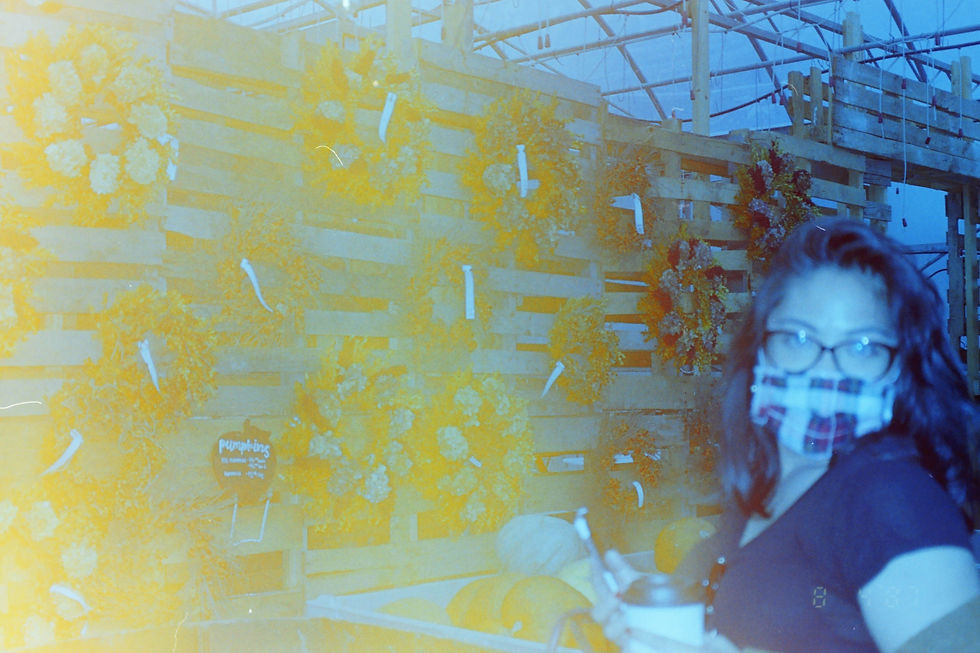
These last two points may seem straightforward, but you're prone to make this mistake at least once. Unless you want to be intentional about light leaks, the moment you open the back cover of your film camera, the light exposure completely ruins the film (hence the need for a darkroom).
If you need to open the back of your camera, make sure to open it in the dark. I made this mistake and, as a result, lost an entire roll of film.
I would also suggest looking into your camera manual to see if there's a button that will wind your film automatically into its canister without having to open the back compartment. After finding the manual for my camera online, I discovered my camera had a tiny button on the bottom that would allow me to rewind the film safely.
As a precaution, find ways to open the back compartment safely to prevent compromising some good film shots.
5. Opening a film canister
Do not open your film canister unless you're developing your photos on your own. After finishing my first roll of film, I honestly did not know how film processing worked. I thought I had to take the film out of the canister and bring it to the photo lab; I bought a slide scanner, so I assumed this is what photo processing was.
What a huge rookie mistake. I ripped open the canister expecting to see outlines of the image and held it up to the light (BIG FACEPALM).
Needless to say, please don't do this. I wasted an entire roll of film, money and frankly, lots of memories.
Once your roll of film is complete, rewind it into its canister manually or let your camera autorewind the film if that's an option and bring it to the photo lab.
Key Takeaways
In short, do your research, consider costs and start with a disposable camera if you can. I trust you have more common sense than I do, but if you've fallen victim to these film mistakes, I appreciate the solidarity.
Most importantly, have fun with it. Mistakes are meant to happen and will help you on your film photography journey!
Interested to see how my first few rolls of film developed? Stay tuned for a future post.
Sign up for updates to receive alerts when new content is posted or follow me on @adiphotographie on Instagram or @adriennearzaga on Twitter.

Comments